Preparing for the Remote Pilot Exam
by Russ Still
Published
Updated
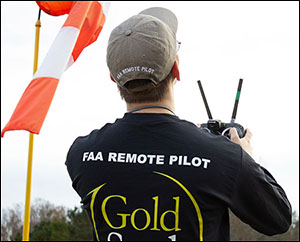 There are a lot of great business opportunities in the commercial drone field. It's a booming profession with a huge number of exciting career options. With planning and a relatively small outlay of cash, you can have a respected aviation job that gets you outdoors and working in a really fun environment.
The FAA oversees commercial drone operations under a Federal regulation called Part 107. This is a specific part of the Code of Federal Regulations that refers directly to small unmanned aircraft (sUAS). The FAA refers to a person who is licensed (technically "certificated") to fly drones and unmanned aircraft as a Remote Pilot.
● Part 107 - the FAA regulations that apply to small unmanned aircraft systems
● Remote Pilot - a person who holds an FAA airman certificate to fly "drones"
● sUAS - small unmanned aircraft system
Becoming a Remote Pilot
Becoming a certificated Remote Pilot is very straight forward. The only requirement is to pass a 60-question multiple-choice exam offered by the FAA. The minimum passing score is 70%. You are allowed 2 hours to complete the exam, but you will likely finish in less time.
This exam covers a variety of subjects that are required knowledge for all aviators. As a commercial drone pilot, you will be operating in the National Airspace System and will be dealing with many of the same issues that affect pilots of manned aircraft.
The FAA exam is not just an obstacle to overcome. It deals with important subjects, many of which will affect you on a frequent basis. It covers material that you really need to know. Don't let anyone tell you different.
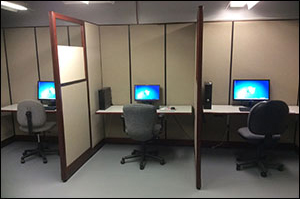 The FAA exam costs $175 and is administered at an authorized PSI testing center. You must score at least 70% to pass. If you don’t, you will have to return for a retake costing you another $175. The exam is not terribly difficult, but you do have to study. Crossing your fingers and taking wild guesses won’t get you through it. There are LOTS of reasons for you to do well on this exam the first time!
The FAA publishes free study materials online, but that in itself can be a problem.
The materials include documents and textbooks for pilots of manned aircraft. Out of 1500+ pages, only a small percentage refer to the material that will appear on your Remote Pilot exam. That leaves you with the challenge of determining which parts are relevant and which are not. They do provide one study guide that is moderately helpful, but insufficient if used alone. You can supplement the FAA materials with videos on YouTube, but be aware that most of these were not created by FAA instructors. They were created by self-trained hobbyists and contain frequent errors and omit important information.
The better option is to take a guided course, developed by FAA instructors. These instructors have been trained to FAA standards, and certificated by the FAA to teach the exact material that is presented in the FAA Remote Pilot exam.
FTN Number
Before scheduling your exam with PSI, you must have an "FTN" number provided by the FAA. You can generate your FTN number by creating a free account at https://iacra.faa.gov.
Topics Covered on the FAA Exam
The Remote Pilot FAA exam contains questions from a distinct set of topics. These topics are identified in an FAA document called the Airman Certification Standards (ACS). UAVGroundSchool follows the ACS and teaches you exactly what you need to know for the exam.
The main topics of the FAA exam include:
- FAA Regulations
- National Airspace System
- Aeronautical Charts
- Airport Operations
- Airspace Operational Requirements
- Weather Theory
- sUAS Loading and Performance
- Radio Communications Procedures
- sUAS Emergency Procedures
- Aeronautical Decision Making (ADM)
- Physiology (Aeromedical Factors)
- sUAS Maintenance and Inspection Procedures
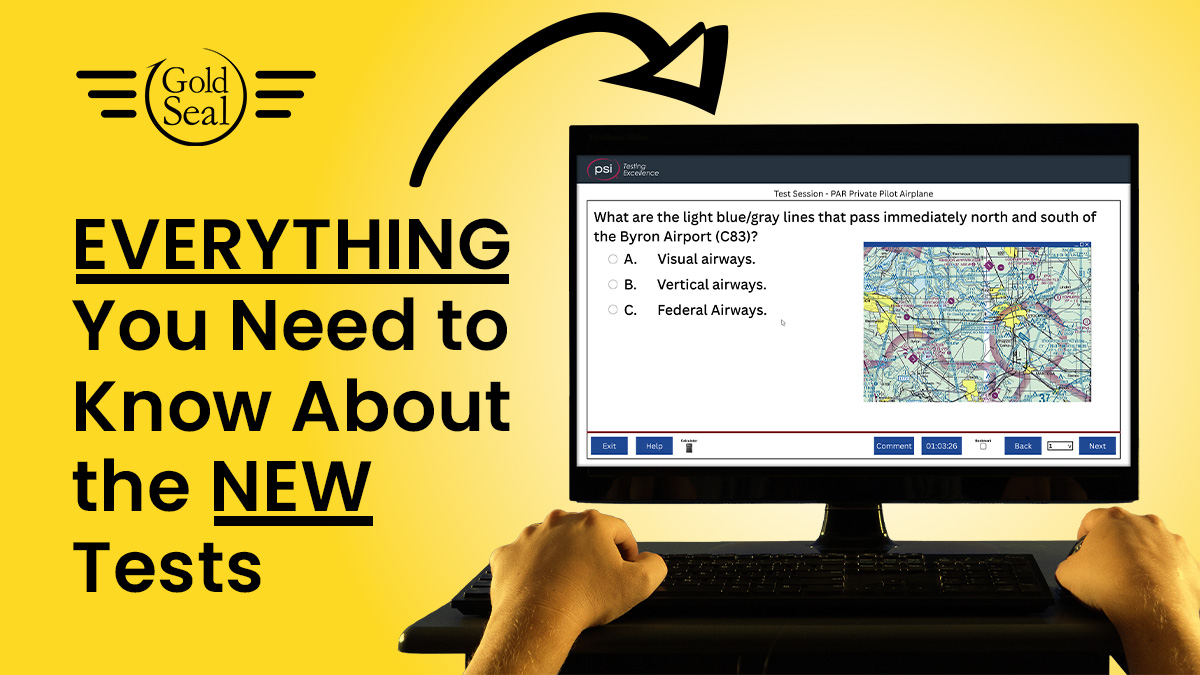
Much of your FAA exam will involve a thorough understanding of Regulations, Aeronautical Sectional Charts, and the National Airspace System. Over half of the questions in your exam will somehow refer back to these subjects. For example, an FAA question might identify a location and ask what you need to fly there. In addition to knowing the Regulation requirements, you will have to read a Sectional Chart to determine what class of airspace will be at issue.
How to Pass the FAA Exam
The Gold Seal Ground School lessons include quizzes that relate specifically to the lesson subject. The FAA does reword their questions from time to time. In most cases, however, the Gold Seal quizzes will show you the exact questions that the FAA uses. Quizzes are randomized so that each quiz is different. Flash Cards are also available in the lesson quizzes for quick reviews.
Every quiz is archived for later review. You can even print out PDFs showing just the questions you missed.
When you have completed all the lessons and lesson quizzes, Gold Seal Ground School provides Practice Final Exams. These are 50-question exams, formatted roughly like the real FAA exam. They pull questions at random from the full course database containing over 450 FAA questions. You can take the Practice Finals as often as you like. Each one is different.
When you have completed the course, take the Gold Seal Ground School final exam. You may take it once in a 24-hour period. Pass it with a score of 80% or better and then print your Certificate of Completion, signed by an FAA Certificated Flight Instructor.
Once you have completed the course and are confident that you're making consistently good scores, visit the PSI website to schedule your FAA exam at a testing center near you.
On Test Day
Arrive at the testing center a few minutes early to complete their sign up procedure. Make sure to bring a valid photo ID with you. You will not be allowed to take your smart phone into the exam, but some people recommend bringing a magnifying glass. All of the sectional charts and figures referenced in the test questions are provided in a hard-copy of the Knowledge Test Supplement. The testing center will provide a copy of this booklet. Remember that a sectional chart legend appears at the front of this book. Use it if you need to confirm any symbols or airspace boundaries in a test question.
The test is proctored and you will be observed during the test. When you have completed the test you will receive a document called the Knowledge Test Report. This has an embossed seal to show that it is an original. Protect it with your life! It will be difficult to replace if you lose it. About 48 hours after passing your exam, log in to IACRA.FAA.GOV. Then, place your submission for your Remote Pilot Certificate. A temporary copy will appear in your account in a few days. Print this out and keep it with you until you receive your permanent certificate in the mail. This usually takes 8-10 weeks.