How to Safely Fly a Touch-and-Go
by Russ Still
Published
Updated

If you’re a primary student, you may or may not have experienced a lot of touch-and-goes. They do serve a good purpose – they allow you to get in more trips around the traffic pattern when you’re brushing up on your landings. But this economy of time brings with it a few elevated risks. Here are a couple of tips to ensure safer touch-and-goes.
What is a Touch-and-Go?
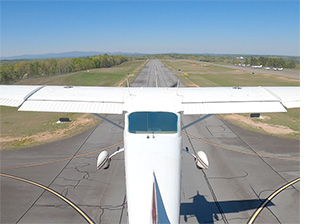 A touch-and-go is a normal landing followed by a takeoff without stopping or exiting the runway. A variant of this is the “stop-and-go”. In this case you land normally, come to a complete stop on the runway, then reconfigure for the takeoff, and depart. Because the stop adds time to reconfigure the airplane, the stop-and-go carries less risk than a conventional touch-and-go. In fact, some instructors prefer that their primary students don’t do touch-and-goes at all.
There are a few safety tricks that some pilots haven't discovered.
What Can Go Wrong?
The profile for a touch-and-go has three segments:
1. The approach and touchdown
2. The reconfiguration (while the aircraft is still moving on the runway)
3. The departure
Segment 1, the approach and touchdown, is normal. It’s just like any other landing.
Segment 2 is where the risk increases. The airplane is on the pavement and is in its landing rollout. It’s moving at faster than taxi speed. Possibly much faster.
During this time the pilot must stay on the runway centerline, correct for any crosswind, watch for traffic and obstacles, set the carb heat to off (unless in a fuel injected aircraft), adjust the landing trim setting to the takeoff setting, reconfigure flaps, and open cowl flaps (if installed).
One of the common problems here is loss of directional control because the pilot is distracted, and possibly not looking at the runway centerline.
That leads us to Segment 3. This should be a normal, albeit rushed, takeoff. Pilot stress level may be slightly elevated resulting in mishandling any crosswind. But the bigger danger involves trim. If the trim has not been reset from its approach and landing setting, the addition of takeoff power may cause the nose to pitch up steeply and quickly resulting in departure stall. This one’s a bigee!
Reducing the Risk
Segment 2, the rollout and reconfiguration, is where risk first increases. The airplane is rolling at a high speed and there are a number of things that the pilot has to quickly change. Flaps and trim are at the top of the list.
If the airplane is carbureted, first turn the carb heat off. This is probably a simple push with your thumb. From there I suggest resetting the flaps next. This eats up a few seconds of rollout time and allows the airplane to decelerate slightly before continuing.
Next comes the trim setting. The most common problem here is that the pilot looks down (or up) while resetting the wheel. It’s easy to return to the windscreen to see the airplane veering off the centerline toward the grass. There’s an easy fix for this one.
Pro Tip #1: After your next full stop landing, count the number of turns needed to bring the trim wheel back to its takeoff setting. Then, on your touch-and-goes, don’t look at the trim wheel while resetting it. Keep your eyes on the runway and count the turns. THEN take a quick glance to confirm that it is in the takeoff setting.
Segment 3, the departure, is the last part of the touch-and-go. If you didn’t get the trim set properly, this is where you’ll discover the mistake.
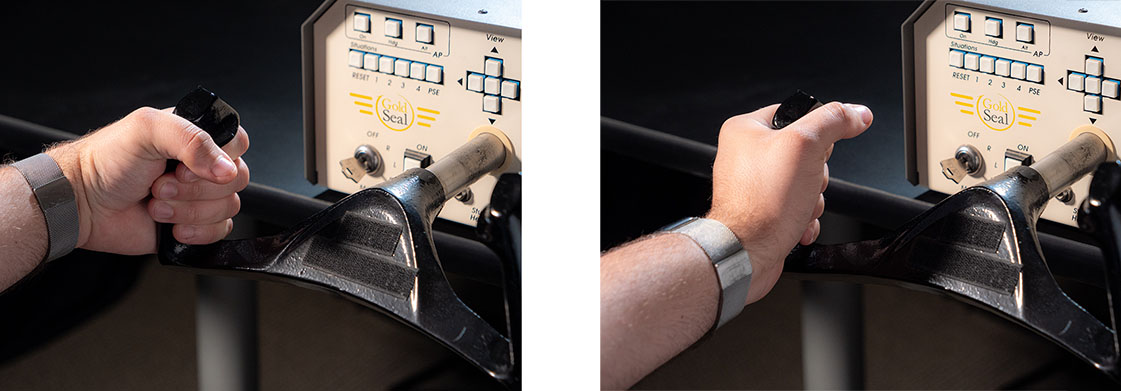
Pro Tip #2: To mitigate this, rotate your hand so that the yoke is pressed into your hand, not just your thumb. If there is a significant pitch up, the yoke may forcefully come back at you, escaping past your thumb. By repositioning your hand, the yoke will, instead, be driven into the heel portion of your palm, like a backstop. This will stop the rapid pitch up and keep you out of stall territory.
Mastering the Touch-and-Go
There is definitely a place for touch and goes in aviation. But the procedure does include elevated risk and should be practiced just like any other procedure or maneuver. The two most overlooked problems are (1) looking down while resetting the trim, and (2) being unprepared for a takeoff with the trim set incorrectly. Count your turns of the trim wheel while looking at the runway, and rotate your hand before pushing the throttle in for takeoff power.